
Non-contact voltage testers are among the most frequently used tools in any electrician’s toolkit. They provide a fast and safe way to detect the presence of AC voltage before touching wires or terminals. Sperry Instruments, a brand that has been manufacturing electrical testing equipment for decades, offers several non-contact voltage tester models aimed at both professional electricians and serious DIY users.
The Sperry VD6509 is one of their most popular non-contact voltage testers. It consistently appears in discussions about affordable yet reliable voltage detection tools for residential and commercial electrical work. Many electricians carry one as a secondary verification tool alongside their professional electrical gear like a quality multimeter or clamp meter.
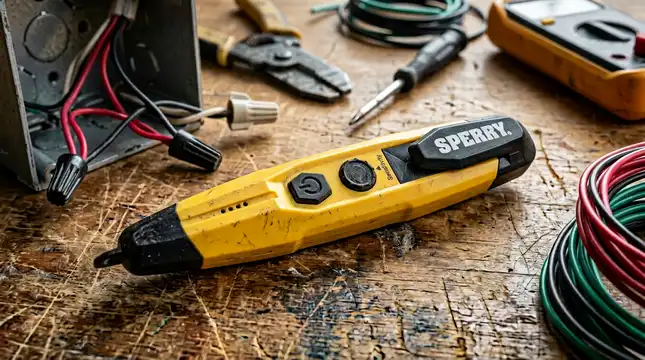
In this detailed review, we will evaluate everything you need to know about the Sperry VD6509 Non-Contact Voltage Tester, including its technical specifications, build quality, real-world performance, pros and cons, and safety ratings. Practical testing scenarios are included to help you make an informed purchasing decision.
1. Product Overview & Core Specifications
The Sperry VD6509 is a pen-style non-contact voltage tester designed to detect AC voltage in cables, cords, circuit breakers, light fixtures, switches, and outlets. It does not require physical contact with bare conductors. Instead, it senses the electromagnetic field generated by energized AC wiring.
Here are the core technical specifications:
- Voltage Detection Range: 50V to 1000V AC
- Detection Method: Capacitive sensing of electromagnetic fields
- Alert Type: Dual indication — red LED light and audible beeper
- Power Source: Two AAA batteries (included)
- Safety Rating: CAT IV 1000V per IEC 61010-1 standards
- Certifications: UL Listed, cETL Listed
- Auto Power-Off: Yes (approximately 5 minutes of inactivity)
- Operating Temperature: 32°F to 122°F (0°C to 50°C)
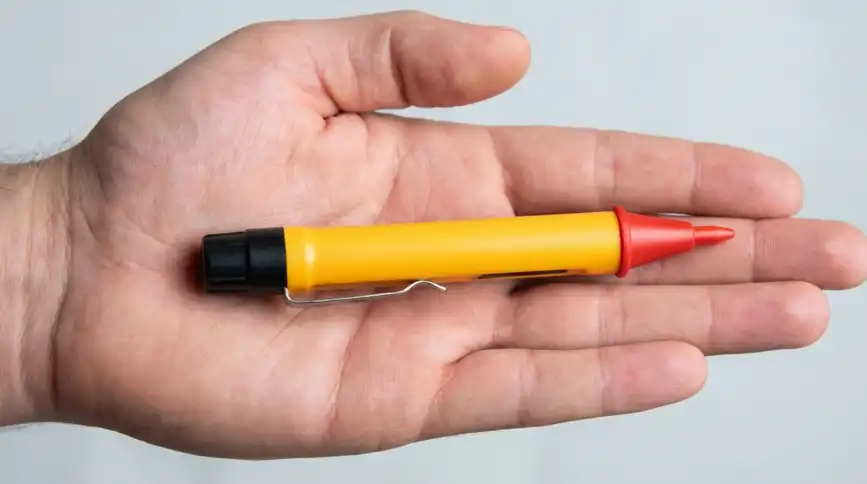
- Dimensions: Approximately 6.5 inches long, pen-sized form factor
- Weight: Approximately 2 ounces (with batteries)
The CAT IV 1000V safety rating is noteworthy. CAT IV classification under the IEC 61010 standard means the tool is rated for use at the origin of electrical installation — think utility connections, service entrance equipment, and outdoor overhead lines. This is the highest measurement category. Many competing non-contact voltage testers in this price range only carry a CAT III rating. For professional electricians working near service panels and meter bases, CAT IV compliance adds an extra layer of confidence.
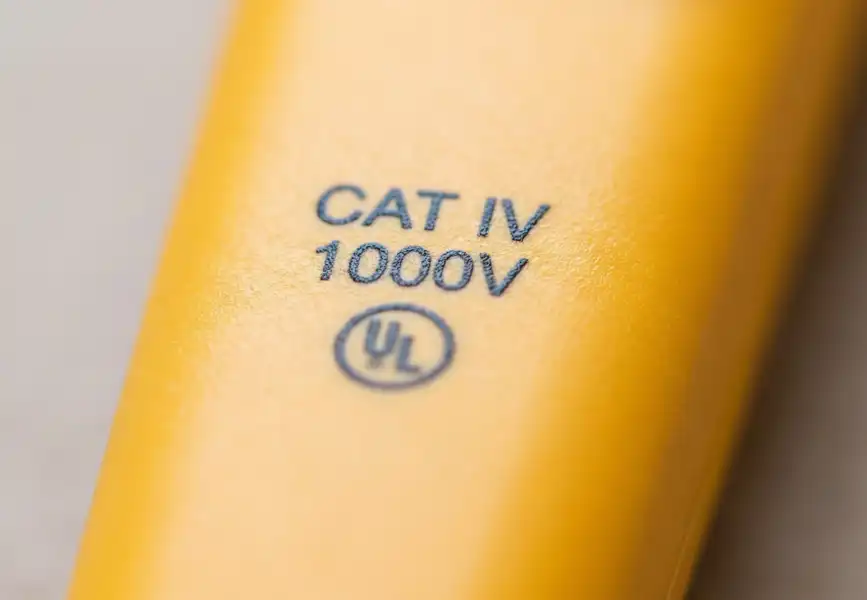
The tool also meets ANSI/ISA-61010-1 standards, which align with North American safety requirements for electrical test equipment.
2. Design and Build Quality
The Sperry VD6509 has a straightforward pen-style design. It is slim, lightweight, and fits comfortably in a shirt pocket or tool pouch. The body is made from durable ABS plastic with a textured grip area that prevents slipping during use, even with sweaty or slightly dirty hands.
The tip is narrow enough to insert into standard outlet slots and tight spaces behind panels. This is useful during rough-in inspections or troubleshooting inside crowded junction boxes. The pocket clip is sturdy and keeps the tester securely attached when not in use.
One practical design element worth noting is the single-button operation. Press and hold the power button to activate the tool. The unit performs a brief self-test — the LED flashes and the beeper chirps — confirming that the batteries are good and the tool is functioning. This self-test feature is a simple but effective safety check that many electricians appreciate before trusting any voltage detection tool.
The battery compartment is located at the rear of the tool and requires a small Phillips screwdriver to open. Some users may find this inconvenient during battery changes, but it also means the battery cap won’t come loose accidentally if the tool is dropped.
Build quality is acceptable for the price point. It feels solid enough for daily use, though it is not as rugged as some higher-end industrial electrical tools like the Fluke 1AC-II or the Klein NCVT-2. If you regularly drop tools from heights or work in extremely harsh environments, you may want to consider a model with a higher drop-test rating.
3. Real-World Performance
To properly evaluate the Sperry VD6509, I tested it across several common electrical scenarios that professional electricians encounter daily.
3.1 Scenario 1: Residential Panel Work
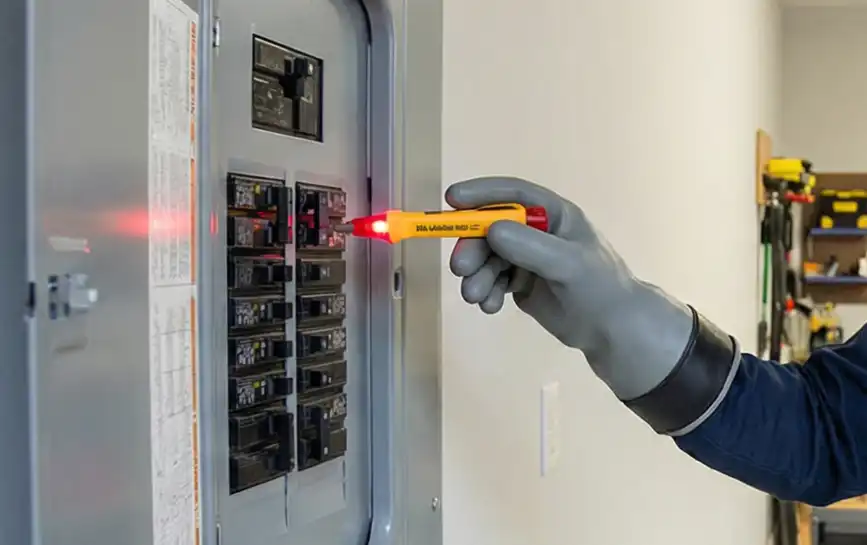
I used the VD6509 to verify energized circuits at a 200-amp residential main panel. The tester responded quickly and consistently to hot conductors at 120V and 240V. The red LED was bright enough to see clearly even with the panel cover removed and ambient lighting in the garage. The audible beep was loud enough to hear over background noise from a running HVAC system nearby.
3.2 Scenario 2: Outlet and Switch Testing
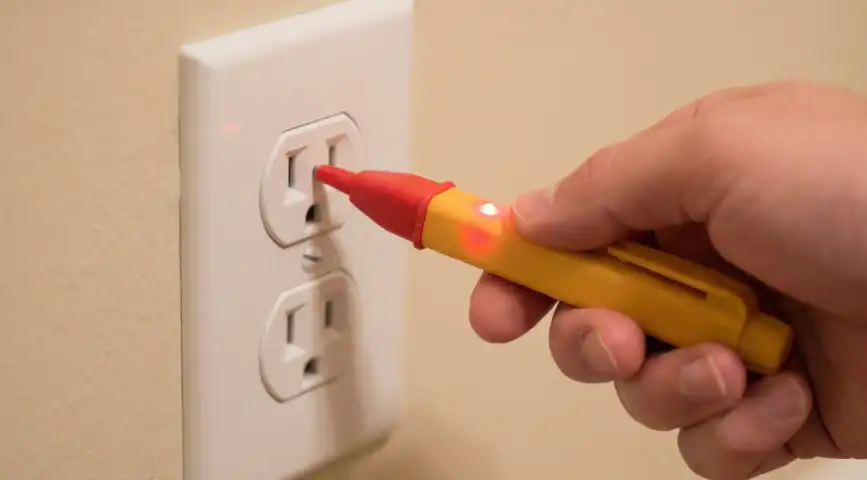
At a residential remodel job, I tested multiple outlets and switches before removing cover plates and pulling devices from boxes. The VD6509 correctly identified energized circuits through the outlet slots. It also detected voltage through standard NM-B (Romex) cable sheathing at close range, which is useful for tracing live wires behind finished walls.
3.3 Scenario 3: Commercial Lighting Circuit
On a commercial tenant improvement project, I used the tester to check 277V lighting circuits. The tool detected the higher voltage reliably, with the beep frequency increasing as the tip got closer to the energized conductor. This graduated alert system helps distinguish between being near a live wire and being directly on it.
3.4 Scenario 4: False Positive and Sensitivity Check
One concern with any non-contact voltage tester is false positives. During testing, the VD6509 did produce occasional false indications near bundled conductors in a crowded panel. This is common with capacitive-sensing tools and is not unique to Sperry. Induced voltage from adjacent hot conductors can trigger the sensor. This is exactly why NFPA 70E and standard industry practice require electricians to verify the absence of voltage using a direct-contact tester (such as the best multimeter for electricians in your toolkit) after using a non-contact tester.
3.5 Scenario 5: Low Voltage Detection Limitation
The VD6509 has a minimum detection threshold of 50V AC. It will not detect low-voltage systems like 24V thermostat wiring, 12V landscape lighting, or data/communication cables. This is standard for most non-contact voltage testers at this price point, but it is worth keeping in mind if you work on mixed-voltage systems.
3.6 Sensitivity Adjustment
The Sperry VD6509 does not feature adjustable sensitivity. Some higher-end models allow users to switch between high and low sensitivity modes, which can reduce false positives in crowded panels. The fixed sensitivity on the VD6509 is set at a level that works well for most standard electrical work, but this limitation may frustrate users who need more precise detection in specific applications.
4. Pros and Cons
4.1 Pros
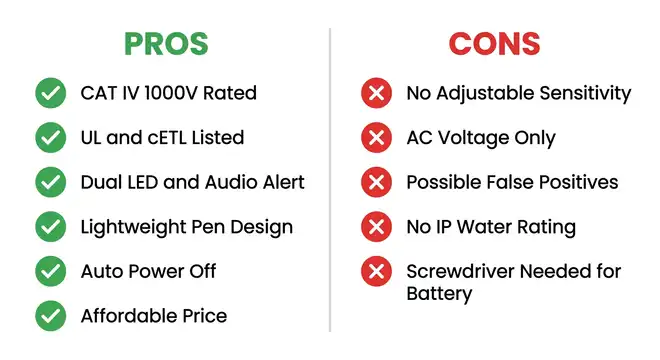
- CAT IV 1000V safety rating — exceeds many competitors in this price range
- UL and cETL listed for North American safety standards
- Dual alert system with both LED and audible indicators
- Self-test function at power-on for quick operational verification
- Lightweight and compact pen-style design fits easily in a pocket
- Simple one-button operation with no learning curve
- Auto power-off conserves battery life
- Affordable price point makes it accessible for apprentices and homeowners
- Detects voltage through wire insulation and cable sheathing
4.2 Cons
- No adjustable sensitivity settings
- Occasional false positives in crowded panels with bundled conductors
- Cannot detect DC voltage
- Minimum 50V threshold means it cannot detect low-voltage circuits
- Battery compartment requires a screwdriver to open
- Less rugged construction compared to premium industrial electrical tools
- No IP rating listed for water or dust resistance
5. Who Should Buy This Tool?
The Sperry VD6509 is well-suited for several types of users:
Licensed Electricians looking for an affordable backup non-contact tester to carry alongside their primary test equipment will find this tool reliable for daily use. It is not a replacement for a quality direct-contact voltage tester or the best multimeter for electricians, but it serves its purpose as a first-check tool before making contact with conductors.
Electrical Apprentices who are building their toolkit on a budget will appreciate the low cost and straightforward operation. The CAT IV rating also means apprentices can use it confidently in service entrance environments under supervision.
Maintenance Technicians and Facility Managers who perform routine checks on electrical panels, lighting circuits, and outlets will find the VD6509 to be a practical addition to their tool bag.
Serious DIY Homeowners who tackle their own electrical projects can use this tool to verify that circuits are de-energized before working on outlets, switches, or light fixtures. However, homeowners should remember that a non-contact tester is a screening tool, not a definitive verification instrument.
Inspectors who need a quick go/no-go indication during walkthroughs will find the compact size and fast response time useful.
If you require adjustable sensitivity, DC voltage detection, or a waterproof rating, you should look at higher-end options from brands like Fluke, Klein, or Milwaukee. Those models typically cost more but offer additional features that justify the investment for specific professional applications.
6. Final Verdict
The Sperry VD6509 Non-Contact Voltage Tester is a competent and affordable tool that performs reliably in standard residential and commercial electrical work. Its CAT IV 1000V safety rating puts it ahead of many competitors at a similar price point, and its UL/cETL listings confirm compliance with recognized North American safety standards.
It does what a non-contact voltage tester should do — quickly indicate the presence of AC voltage so you can make safer decisions before touching wires. It is not a precision instrument, and it should never be your only method of verifying a de-energized circuit. Always follow up with a direct-contact tester as recommended by NFPA 70E guidelines.
For its price, the Sperry VD6509 earns a solid recommendation as an everyday carry tool for electricians, apprentices, and maintenance professionals. It is a no-frills, functional piece of top-rated testing equipment that belongs in your tool pouch.
7. Frequently Asked Questions (FAQs)
Yes, the Sperry VD6509 is accurate for its intended purpose of detecting AC voltage between 50V and 1000V. However, it should always be used as a preliminary check. Professional electricians should verify results with a direct-contact tester or multimeter before working on any circuit.
No, the Sperry VD6509 only detects AC voltage. It uses capacitive sensing technology, which responds to the alternating electromagnetic field produced by AC circuits. It will not detect DC voltage from batteries, solar panels, or DC power supplies.
The VD6509 uses two AAA batteries. Battery life varies based on usage, but the auto power-off feature helps extend battery lifespan. Most users report several months of regular use before needing a battery change.
The VD6509 can detect energized wires through standard drywall and NM-B cable sheathing at close range. However, it is not designed as a wire tracer and may not reliably detect wires buried deep in walls or behind metal surfaces.
Yes, the VD6509 is rated for AC voltage detection up to 1000V and carries a CAT IV safety rating. It can safely detect 240V circuits commonly found in dryer outlets, range connections, and HVAC disconnect boxes.
The Sperry VD6509 offers a similar basic feature set at a lower price point. The Fluke and Klein models generally offer better build quality, adjustable sensitivity (on some models), and stronger brand recognition in the professional market. The Sperry is a good budget alternative for users who want a reliable secondary tool.
No, car electrical systems run on DC voltage (typically 12V), which is below the VD6509’s 50V AC minimum detection threshold. This tool is designed exclusively for AC voltage detection.
The Sperry VD6509 is widely available at major home improvement retailers like Home Depot and Lowe’s, as well as online through Amazon and electrical supply distributors across the US, Canada, UK, and Australia.