
Most people have experienced a small flash of light or a brief spark when plugging a device into a wall outlet. In many cases, this is a normal electrical event that lasts for a fraction of a second. However, not all sparks are harmless. Some sparks indicate a serious wiring problem, a damaged outlet, or a fire hazard that demands immediate attention. Electrical fires cause thousands of home fires every year in the United States, Canada, the United Kingdom, and Australia. Many of these fires start at outlets and receptacles due to loose connections, worn-out components, or improper wiring.
In this technical guide, we will discuss everything you need to know about outlet sparking, including its causes, the science behind electrical arcing, how to identify dangerous sparks, safety measures, proper outlet maintenance, NEC and ANSI code references, testing methods, and when to call a licensed electrician. Practical examples are included throughout to help you apply these concepts in real-world scenarios confidently.
1. Why Do Outlets Spark?
An electrical outlet in a residential or commercial building carries alternating current (AC) at either 120V (in the US and Canada) or 230V (in the UK and Australia). The current flows through hot (live), neutral, and ground conductors. The outlet provides a point of connection between the building’s electrical system and a load such as a lamp, a phone charger, or a vacuum cleaner.
A spark occurs at the moment a plug’s metal prong comes close enough to the energized contact inside the outlet. At that instant, a small air gap exists between the prong and the contact. Air is normally an insulator, but a high enough electric field can ionize the air molecules and create a conductive path. This phenomenon is called electrical arcing.
The arc is brief and small if the outlet and plug are in good condition. Think of it like a tiny lightning bolt. Once the prong makes full contact with the outlet’s internal metal clip, the arc stops and current flows through the solid metal connection instead.
Practical example: If you plug in a desk lamp that is already switched on, the lamp is drawing current immediately. The brief spark you see is the arc that forms during the split second before the prong fully seats into the outlet. This is a normal event and not a cause for concern.
2. Normal Sparks vs. Dangerous Sparks
Not every spark at an outlet is a problem. Learning to distinguish between a harmless spark and a dangerous one is a valuable skill for any electrical professional or homeowner.
2.1 Characteristics of a Normal Spark
A normal spark is very brief, lasting less than a second. It is small in size, typically blue in color, and does not produce any smell. You might see it occasionally, but it should not happen every single time you plug something in. The sound, if any, is a faint snap.
2.2 Characteristics of a Dangerous Spark
A dangerous spark looks and behaves differently. It may be large, bright yellow or white, and accompanied by a popping or buzzing sound. You might smell burning plastic or notice scorch marks around the outlet. The spark may last longer than a second or may repeat even after the plug is fully inserted. The outlet face plate might feel warm or hot to the touch.
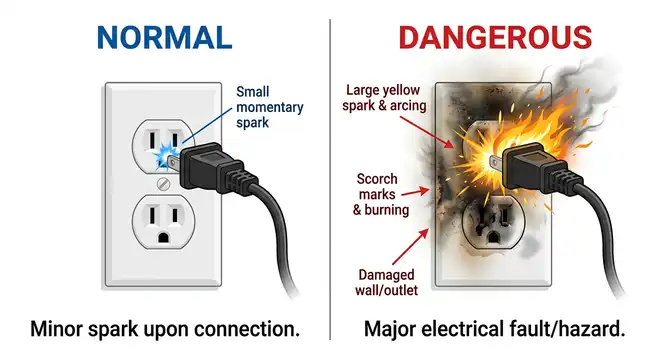
Practical example: Suppose you plug a hair dryer into an outlet and notice a large yellow spark, followed by a burning smell. The outlet face plate has a small brown mark on it. These are signs of a dangerous condition. Stop using that outlet immediately and have it inspected by a licensed electrician.
3. Common Causes of Outlet Sparking
Several factors can cause an outlet to spark. Some are harmless, and some point to a serious electrical fault. Below are the most common causes.
3.1 Normal Load-Side Arcing
This is the harmless type of spark described above. It happens because the electrical circuit is completed through an air gap for a brief moment. It is more noticeable with high-wattage appliances because more current flows at the moment of connection.
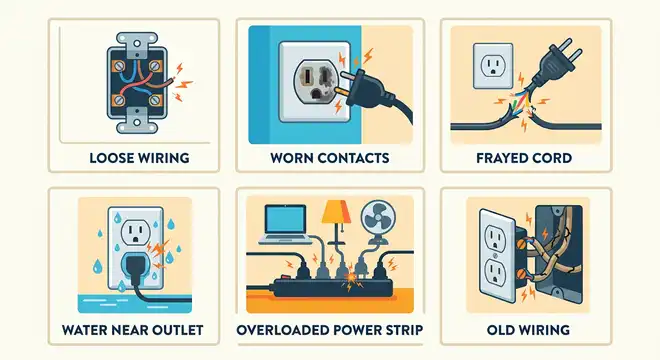
3.2 Loose Wiring Connections
Over time, the wire connections behind an outlet can become loose. This can happen due to thermal expansion and contraction, vibration, or poor initial installation. Loose connections increase resistance at the junction point. Higher resistance generates heat and can cause arcing inside the outlet box.
According to the National Electrical Code (NEC), Article 110.14, all electrical connections must be made tight and secure using approved methods. A loose connection violates this requirement and creates a fire risk.
3.3 Worn-Out Outlet Contacts
The internal metal clips that grip the plug prongs wear out over time. After thousands of insertion and removal cycles, these clips lose their spring tension. A loose fit between the plug and the outlet creates a gap where arcing can occur repeatedly.
3.4 Short Circuits
A short circuit occurs when the hot conductor comes into direct contact with the neutral or ground conductor. This creates a path of very low resistance, causing a large surge of current. The result can be a bright, large spark at the outlet, followed by the circuit breaker tripping.
3.5 Moisture in the Outlet
Water is a conductor. If moisture enters an outlet box due to a leak, condensation, or improper installation in a wet location, it can create an unintended conductive path between the hot and neutral or hot and ground terminals. This can cause sparking, tripping of GFCI devices, or even electrical shock.
NEC Article 406.9 requires receptacles installed in wet or damp locations to have weatherproof covers. Failure to follow this code can result in moisture-related arcing.
3.6 Overloaded Circuits
Plugging too many devices into a single circuit can overload it. An overloaded circuit causes excess heat at the outlet and at the wiring connections. This heat can degrade the insulation and create conditions for arcing.
NEC Article 210.21(B) addresses the permissible loads on receptacle circuits. A 15-amp receptacle on a 15-amp circuit should not have loads exceeding 12 amps (80% of the circuit rating) for continuous use.
3.7 Damaged or Old Wiring
Homes built before the 1970s may have aluminum wiring or cloth-insulated wiring. Aluminum wiring is prone to oxidation and loose connections. Cloth insulation deteriorates over time and can expose bare conductors. Both conditions increase the risk of arcing at outlets.
4. What to Do Immediately If an Outlet Sparks
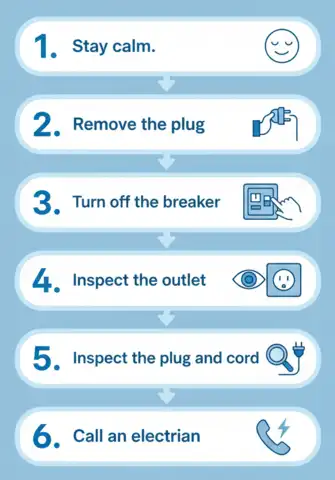
If you see a spark at an outlet, follow these steps in order.
Step 1: Do Not Panic, but Do Not Ignore It
A single small blue spark is usually harmless. However, if the spark is large, yellow, prolonged, or accompanied by a smell or sound, take it seriously.
Step 2: Remove the Plug
Pull the plug out of the outlet carefully. Hold the plug body, not the cord, to avoid injury. Do not yank the cord, as this can damage the wire connections inside the plug.
Step 3: Turn Off the Circuit Breaker
Go to your electrical panel and turn off the circuit breaker that controls that outlet. If you do not know which breaker it is, turn off the main breaker temporarily.
Step 4: Inspect the Outlet Visually
Look at the outlet face plate. Check for burn marks, discoloration, cracks, or melted plastic. Check if the outlet feels hot. These are signs of internal damage.
Step 5: Inspect the Plug and Cord
Check the appliance plug for bent or blackened prongs. Inspect the cord for fraying, cuts, or exposed wires. A damaged plug or cord should be replaced before using the appliance again.
Step 6: Call a Licensed Electrician
If you found any of the danger signs listed above, contact a licensed electrician to inspect and repair the outlet. Do not attempt to use the outlet until it has been cleared as safe.
5. How to Prevent Outlet Sparking
Prevention is always better than dealing with a dangerous situation after it develops. Here are practical steps to reduce the risk of outlet sparking.
5.1 Use AFCI-Protected Circuits
Install AFCI circuit breakers or AFCI outlet receptacles in all areas of the home where they are required by code. AFCI devices are designed to detect the electrical signature of dangerous arcs and shut off the circuit. This is one of the most effective ways to prevent arc-related fires.
5.2 Replace Old or Worn Outlets
If an outlet does not grip a plug firmly, replace it. A new outlet from a reputable manufacturer costs a few dollars and takes a licensed electrician a short time to install. Outlets have a limited lifespan, and replacing them proactively is a sound investment in electrical safety.
5.3 Avoid Overloading Outlets
Do not plug high-wattage appliances into the same circuit simultaneously. For example, running a space heater (1500W) and a hair dryer (1875W) on the same 15-amp circuit exceeds the circuit’s safe capacity. Use separate circuits for high-draw appliances.
5.4 Keep Outlets Dry
In kitchens, bathrooms, laundry rooms, and outdoor areas, make sure outlets have GFCI protection and appropriate weatherproof covers. Never use an outlet with wet hands or in a wet environment unless it is properly rated and protected.
5.5 Turn Off Appliances Before Plugging In
A simple habit can reduce sparking: switch off the appliance before plugging it into the outlet. This way, the circuit does not carry load current at the moment of contact, and the chance of a spark is greatly reduced.
Practical example: Before plugging in a table saw in a workshop, make sure the saw’s power switch is in the off position. Plug in the cord, and then turn the saw on. This eliminates the load-side arc at the outlet.
5.6 Schedule Regular Electrical Inspections
A home electrical inspection performed by a qualified electrician every 5 to 10 years can catch problems before they become hazards. The electrician can check for loose connections, outdated wiring, improper grounding, and worn-out components.
6. How to Test an Outlet for Safety
You can perform some basic tests on an outlet using inexpensive tools. However, any repair work should be left to a licensed electrician.
6.1 Using a Receptacle Tester
A plug-in receptacle tester (sometimes called an outlet tester) costs about $10-$15 and can identify common wiring faults. You plug it into the outlet, and a pattern of indicator lights tells you if the outlet is wired correctly, has an open ground, has reversed polarity, or has other faults.
6.2 Using a Multimeter
A digital multimeter can measure the voltage at an outlet. Set the multimeter to AC voltage mode and insert the probes into the hot and neutral slots. In the US, you should read approximately 120V. A reading significantly lower or higher than expected could indicate a wiring problem.
6.3 Checking for Hot Spots with an Infrared Thermometer
An infrared thermometer or a thermal imaging camera can detect excessive heat at outlets and connections. A hot outlet is a warning sign of a loose connection or an overloaded circuit. Professional electricians use thermal imaging as part of preventive maintenance programs.
7. When to Call a Licensed Electrician
Some situations are beyond the scope of DIY troubleshooting and require a professional. Call a licensed electrician if:
- The outlet sparks every time you plug something in.
- You see scorch marks, melting, or discoloration on the outlet or wall.
- You smell burning plastic or a smoky odor near the outlet.
- The outlet or wall plate feels hot.
- The circuit breaker trips repeatedly when the outlet is used.
- The outlet is more than 25 years old and has never been replaced.
- Your home has aluminum wiring.
- You need to install GFCI or AFCI protection.
A licensed electrician has the training, tools, and authority to work on your home’s electrical system safely and in compliance with local codes. Electrical work performed by unqualified individuals can create new hazards and may violate building codes and insurance requirements.
8. Outlet Sparking in Older Homes: Special Considerations
Older homes present unique challenges related to outlet sparking and electrical safety.
8.1 Homes with Aluminum Wiring
Homes built in the late 1960s and early 1970s may have aluminum branch circuit wiring. Aluminum expands and contracts more than copper with temperature changes. Over time, this can loosen connections at outlets and switches. Loose connections cause arcing and heat buildup.
The Consumer Product Safety Commission (CPSC) has noted that homes with aluminum wiring are significantly more likely to have fire-related electrical problems. Remediation options include rewiring with copper or using approved aluminum-to-copper connectors (such as COPALUM or AlumiConn connectors).
8.2 Homes with Knob-and-Tube Wiring
Very old homes may still have knob-and-tube wiring. This type of wiring does not include a ground conductor and may have deteriorated insulation. Outlets in these homes should be carefully evaluated by a licensed electrician, and upgrading the wiring is strongly recommended.
8.3 Homes Without Grounded Outlets
Two-prong (ungrounded) outlets are common in homes built before the 1960s. These outlets lack a ground connection, which reduces the effectiveness of surge protectors and does not allow GFCI protection to function as designed. The NEC permits replacing two-prong outlets with GFCI outlets even without a ground wire, as long as the outlet is labeled “No Equipment Ground.”
9. Conclusion
Outlet sparking is a common electrical event that ranges from completely harmless to genuinely dangerous. A small blue spark that lasts less than a second is usually a normal result of electrical arcing across a tiny air gap. A large, yellow, prolonged spark accompanied by burning smells, scorch marks, or heat is a warning sign that demands immediate action.
The steps are straightforward: stop using the outlet, turn off the circuit breaker, inspect the outlet and plug visually, and call a licensed electrician if any danger signs are present. Proactive measures such as installing AFCI and GFCI protection, replacing worn outlets, avoiding circuit overloading, and scheduling regular electrical inspections can prevent most sparking-related hazards.
10. Frequently Asked Questions (FAQs)
Yes, a small, brief blue spark is normal. It occurs because the plug prong and the outlet contact create a tiny arc as the connection is made. This is a standard electrical phenomenon and is not dangerous if it is small and short-lived.
A yellow or white spark is a warning sign. Normal sparks are small and blue. Large, bright, yellow or white sparks often indicate a loose connection, damaged wiring, or a short circuit.
Yes. Repeated or prolonged arcing at an outlet can generate enough heat to ignite surrounding materials such as insulation, wood framing, or plastic outlet covers.
Yes. An outlet that sparks every time a plug is inserted likely has worn-out contacts or loose internal connections. Replace it with a new outlet installed by a licensed electrician.
AFCI breakers do not prevent sparking itself, but they detect dangerous arcing patterns and disconnect the circuit before a fire can start.
Basic inspection and testing (such as using a plug-in receptacle tester) can be done by a homeowner. However, any repair or replacement work on outlets and wiring should be performed by a licensed electrician to ensure safety and code compliance.
In the United States, replacing a standard outlet costs between $75 and $200, including parts and labor. Installing a GFCI or AFCI outlet may cost $100 to $300 depending on the location and complexity of the work.
Most homeowner’s insurance policies cover fire damage caused by electrical faults. However, if the insurer determines that the damage resulted from deferred maintenance, code violations, or DIY electrical work, the claim may be denied.