
Moisture in transformer insulation is one of the most significant threats to transformer longevity and reliable operation. The online insulating oil drying system (ODS) is a modern, efficient approach to maintaining transformer insulation quality without shutting down the equipment.
Unlike traditional offline methods that require transformer disconnection and extended downtime, online systems allow continuous or periodic drying while the transformer operates under normal load conditions.
In this technical guide we will explore what online oil drying systems (ODS) are, how they work, their components, methods, advantages, and practical applications in power transformer maintenance.
What is an Online Insulating Oil Drying System?
An online insulating oil drying system (ODS) is a portable or stationary equipment setup designed to remove moisture and water content from transformer insulating oil while the transformer is in service.
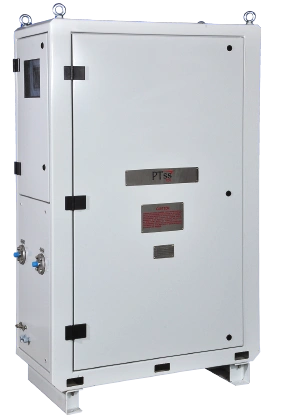
This system circulates oil from the transformer tank through specialized drying and purification units, and returns the treated oil back to the transformer.
The fundamental principle behind online drying is continuous circulation of transformer oil through a series of treatment stages that progressively remove moisture, particles, and dissolved gases without requiring the transformer to be taken offline.
Why Online Drying Systems is Important?
Water and moisture in transformer oil create multiple serious problems that threaten transformer reliability and lifespan.
The effects of moisture contamination include:
- Reduced dielectric strength: Moisture significantly decreases the breakdown voltage of oil, increasing the risk of electrical failures
- Accelerated cellulose aging: Paper insulation absorbs water from oil, causing rapid degradation of cellulose fibers
- Lower thermal conductivity: Moist oil transfers heat less efficiently, causing dangerous temperature rise
- Partial discharge initiation: Water droplets can trigger corona discharge at high voltages
- Bubble formation: At elevated temperatures, water converts to steam, creating bubbles that compromise insulation integrity
Water Effect on Oil Breakdown Voltage
Fresh transformer oil typically has a breakdown voltage of 60-70 kV at standard test conditions. However, when moisture content increases to 200-250 ppm (parts per million), the breakdown voltage can drop to 30-40 kV or lower.
This reduction, sometimes a 50-60% decrease from original specifications, makes the oil unsuitable for high-voltage service.
To understand this in practical terms, a transformer designed to operate at 33 kV with oil of 60 kV breakdown voltage. The Transformer suddenly becomes vulnerable to failure when the moisture content in oil rises to dangerous levels. The margin of safety disappears, and any voltage surge or overstress can trigger catastrophic failure of the Transformer.
This is why drying is not an optional maintenance task but rather a critical requirement for safe transformer operation.
Moisture Content Standards and Limits
Industry standards and specifications have established clear moisture content limits that guide maintenance decisions. The moisture content in transformer oil is typically measured in parts per million (ppm), where one ppm represents one unit of water per million units of oil.
Different moisture levels indicate different degrees of concern and trigger different maintenance actions.
| Moisture Content Level | Oil Condition | Action Required |
|---|---|---|
| 0-35 ppm | Dry (Excellent) | None – Continue monitoring |
| 35-100 ppm | Acceptable | Monitor closely, plan drying |
| 100-200 ppm | Moderate Concern | Schedule drying soon |
| 200-500 ppm | High Risk | Immediate drying required |
| Above 500 ppm | Critical | Emergency drying, consider replacement |
These limits are standardized by ASTM D6304-20 and IEC 60733, which are the internationally recognized standards for transformer insulating oil quality.
The goal of an online oil drying system (ODS) is to maintain moisture content below 35 ppm, ideally below 20 ppm for optimal transformer performance and extended lifespan.
Some utilities targeting maximum transformer life and reliability maintain policies to keep oil moisture below 10 ppm.
How Online Oil Drying Systems Work?
Online insulating oil drying systems operate through several integrated processes working together in a careful sequence. The system draws oil from the transformer tank, processes it through multiple treatment stages, and returns the treated oil back to the transformer.
1. Oil Circulation and Collection
The system draws oil from the transformer’s bottom drain valve or through a dedicated tap point using an electric pump. The pump circulates oil at controlled flow rates, typically ranging from 5-50 liters per minute depending on the system size and transformer rating.
The bottom drain location is preferred because it draws oil from the point where water typically accumulates in the transformer tank due to gravity.
2. Pre-Filtration Stage
Before the oil reaches the drying cartridges, it must first be cleaned through pre-filtration stages.
Coarse filters remove large particles, rust, and metallic debris that inevitably accumulate in transformer tanks during years of operation. These coarse filters typically remove particles larger than 100-150 microns.
Fine filters then remove smaller contaminants that could clog the expensive drying cartridges, typically removing particles down to 10-25 microns.
Some advanced systems also include magnetic separators to extract ferrous particles that could cause electrical issues or catalyze oxidation reactions in the oil.
3. Vacuum Degassing (if equipped)
Some advanced systems include vacuum degassing to remove dissolved gases from the oil.
A vacuum pump reduces the pressure inside a vacuum chamber to 0.1-10 mmHg (millimeters of mercury), creating conditions where dissolved gases naturally separate from the oil.
As pressure decreases, dissolved gases like oxygen, nitrogen, and hydrogen that were previously dissolved in the oil begin to come out of solution.
4. Heating Stage
The system heats oil to 50-70°C (122-158°F) because elevated temperature improves the drying process through multiple mechanisms:
- Lower viscosity: Warm oil flows more freely through drying materials
- Increased evaporation: Higher temperature drives water from cellulose paper insulation into liquid oil
- Enhanced mass transfer: Temperature increases the rate of water removal by 50-100%
- Improved penetration: Warm oil reaches crevices and pores more effectively
- Accelerated paper-to-oil transfer: Water migrates from paper where it cannot be removed to oil where it can
5. Primary Drying Using Molecular Sieves or Silica Gel
This stage represents the heart of the online drying system (ODS) where water is actually removed from the oil. Two main drying mediums are used in the industry: molecular sieves and silica gel. Each material has distinct advantages and limitations that make them suitable for different applications.
Molecular Sieves (3A or 13X Type)
Molecular sieves are synthetic zeolites with uniform pore sizes manufactured specifically for drying applications.
Their characteristics include:
- Structure: Synthetic zeolites with uniform pore distribution
- Drying capacity: Can absorb up to 15-20% of their own weight in water
- Selectivity: Preferentially absorb water molecules over oil components
- Temperature performance: Work effectively from 20°C to 100°C
- Lifespan: Typically last 500-2,000 operating hours before requiring replacement
- Cost: More expensive than silica gel but superior performance
- Application: Preferred for utility operations where speed is critical
The key advantage of molecular sieves is their selectivity, as they preferentially absorb water molecules over oil components. This selectivity means that water is removed from the oil preferentially, leaving the oil’s chemical composition largely unchanged.
Molecular sieves work effectively from 20°C to 100°C, making them suitable for the temperature ranges used in transformer oil drying. A molecular sieve cartridge typically lasts 500-2,000 operating hours before reaching saturation and requiring replacement.
Silica Gel (Type A or B)
Silica gel is an amorphous form of silicon dioxide with a random pore distribution.
Key characteristics include:
- Drying capacity: Absorbs 10-15% of weight in water (somewhat less than molecular sieves)
- Cost: Lower than molecular sieves, attractive for budget operations
- Temperature range: Works best at temperatures below 60°C
- Color indicator: Changes from blue to pink as water is absorbed
- Lifespan: Operates for 300-1,500 hours before saturation
- Application: Ideal for drying oil with relatively low moisture content
Working Mechanism of Drying Cartridges
The working mechanism of drying cartridges is physical adsorption. Water molecules from the oil are physically adsorbed onto the material surface, meaning they stick to the surface through weak electrical attraction rather than chemical bonding.
The material’s porous structure provides enormous surface area for adsorption, reaching up to 1,000 m²/gram in some molecular sieves.
Cartridge saturation process:
- Oil flows through the cartridge at controlled rate
- Water molecules contact the material surface and adhere through physical forces
- Water gradually accumulates on the material surface
- As more water is absorbed, the cartridge become saturated
- Drying efficiency decreases as saturation approaches
- When cartridge nears saturation, effectiveness drops to 10-20% of initial performance
To quantify drying capacity with a practical example, a 500-gram molecular sieve cartridge can remove approximately 75-100 grams of water before needing replacement.
If an oil sample measures 250 ppm moisture before drying, and the goal is to reduce it to 35 ppm, each liter of oil requires removal of about 0.215 grams of water (250-35 = 215 ppm = 0.215 grams per liter).
Therefore, a single 500-gram cartridge could theoretically dry approximately 350-465 liters of oil from 250 ppm to 35 ppm.
Types of Online Insulating Oil Drying Systems
Online drying systems come in several configurations, each suited to different operational requirements and transformer sizes.
Portable Mobile Oil Drying Units
Portable mobile oil drying units are mounted on wheeled carts or trailers for easy transportation between multiple transformer locations. These units are typically designed with flow capacity in the 1-50 liters per minute range, making them suitable for medium to large transformers.
The mobile configuration allows a single drying unit to serve multiple transformers at different substations, making it a cost-effective solution for utilities with distributed transformer networks.
Permanently Installed Drying Systems
Permanently installed drying systems are built into the transformer tank or mounted on a fixed frame at the transformer location. These systems are directly connected via dedicated piping and valves, and they operate continuously or during scheduled maintenance windows.
Characteristics of permanent systems:
- Built into transformer tank or mounted on fixed frame
- Flow capacity: 5-100 liters per minute
- Connected via dedicated piping and valve arrangements
- Continuous or intermittent operation capability
- Always available at the transformer location
- Suitable for large transformers requiring frequent drying
Advantages:
- Always available for immediate operation
- Reduced human intervention after initial setup
- Higher flow capacity for faster drying of large tanks
- Ideal for aging transformers needing regular maintenance
- No transportation or setup time required
- Integrated with transformer monitoring systems
Limitations:
- Higher capital investment required
- Permanent space at substation occupied
- May require transformer modifications for connection
- Maintenance must be performed on-site
Integrated Moisture Control Units
Integrated moisture control units represent a recent innovation combining molecular sieve drying with real-time moisture monitoring using capacitive sensors or other measurement technology. These units automatically operate based on oil moisture measurement rather than fixed schedules.
Key features of integrated units:
- Real-time moisture monitoring capability
- Automatic operation based on actual moisture levels
- Intelligent water removal protocols
- Prevention of secondary contamination
- Sensor-based shutoff when target reached
- Reduced energy consumption through optimized cycles
- Remote monitoring and data logging
Benefits:
- Removes need for manual monitoring and frequent checks
- Optimizes drying cycles based on actual needs
- Reduces over-drying that wastes energy
- Lower operating costs compared to continuous systems
- Prevents secondary contamination from extended drying
- Provides data for predictive maintenance analysis
Components of a Complete Online Oil Drying System
A fully functional online drying system (ODS) consists of multiple components working together in sequence.
Electric Pump:
- Type: Gear or centrifugal pump designed for oil circulation
- Power: 2-15 kW depending on capacity
- Flow rate: Adjustable 5-50 L/min
- Purpose: Circulates oil at controlled rate without aeration
- Selection criteria: Must avoid aerating oil, typically 3-5 HP for distribution transformers
- Performance: Consistent pressure output throughout operation
Filter Units:
- Coarse stage: Removes particles >100 μm, captures large contaminants
- Fine stage: Removes particles >10 μm, protects expensive cartridges
- Replacement frequency: Every 200-500 operating hours of drying
- Bypass valve: Prevents damage from pressure buildup (typically set at 3-4 bar)
- Pressure monitoring: Indicates when replacement is needed
- Cost impact: Regular replacement extends cartridge life significantly
Heating Equipment:
- Immersion heater: 5-20 kW electric resistance element submerged in oil
- Circulating heater: Oil passes through heated water jacket for uniform heating
- Thermostat control: Maintains ±3°C temperature accuracy throughout operation
- Safety limit: Automatic shutoff at 80°C to prevent oil degradation
- Performance: Gradual temperature rise required to avoid thermal shock
- Efficiency: Immersion heaters typically 85-90% efficient, circulating heaters 80-85% efficient
Drying Cartridges:
- Molecular sieve: 500-2000 gram capacity per cartridge
- Silica gel: 300-1500 gram capacity per cartridge
- Configuration: Larger systems use 2-4 cartridges in parallel
- Saturation indicator: Color change for silica gel, electronic sensors for molecular sieves
- Performance: Initial capacity highest, decreases as saturation approached
- Replacement trigger: When efficiency drops or indicator shows saturation
Vacuum Unit (Optional):
- Vacuum pump: Diaphragm or rotary vane type
- Pressure range: 0.1-10 mmHg absolute pressure
- Vacuum gauge: Measures pressure accurately
- Vacuum chamber: Provides space for oil droplet expansion and gas release
- Gas outlet: Vents gases to atmosphere or collection system
- Capacity: Determines speed of gas removal
Control Panel Components:
- Temperature control: Thermostat with setpoint adjustment
- Flow monitoring: Visual display or digital meter
- Pressure gauges: For pump discharge and filter monitoring
- Emergency shutoff: Manual button and automatic safeguards
- Data logging: Records all parameters for documentation
- Alarm indicators: Alert for maintenance needs or abnormal conditions
Drying Methods Comparison
| Method | Process | Temperature | Time Required | Best For | Cost |
|---|---|---|---|---|---|
| Vacuum + Heating | Oil heated then degassed under vacuum | 40-70°C | 6-12 hours | Large transformers, high initial moisture | High |
| Molecular Sieve Only | Oil passes through drying cartridges | 20-60°C | 12-24 hours | Regular maintenance, medium moisture | Medium |
| Silica Gel Only | Cheaper alternative drying material | 20-50°C | 18-36 hours | Budget operations, low moisture | Low |
| Vacuum + Molecular Sieve | Combined vacuum and drying approach | 30-60°C | 4-8 hours | Emergency drying, very wet oil | High |
| Continuous Circulation | Slow drying over extended period | Ambient-40°C | Days/Weeks | Minimal disruption needed | Medium |
International Standards and Specifications
Online oil drying systems and transformer oil quality are governed by internationally recognized standards that specify acceptable practices and quality targets.
Key standards:
- ASTM D6304-20: Standard test method for Karl Fischer moisture determination in insulating oil
- IEC 60733: Insulating liquids and gases specifications and quality requirements
- IEEE C57.104-2019: Guide for transformer insulation life management and maintenance
- IEC 60076-3: Power transformers — Part 3: Insulation levels, dielectric tests, and external clearances
Standard requirements specify:
- Maximum acceptable moisture content typically below 35 ppm
- Best practice targeting below 20 ppm for maximum transformer life
Conclusion
The online insulating oil drying system represents an advancement in transformer maintenance technology, offering a practical, cost-effective solution to one of the most common threats to transformer reliability: moisture in insulation.
Understanding the working principles, components, and proper operational procedures, electrical engineers and maintenance professionals can effectively extend transformer life, minimize downtime, and ensure reliable power delivery to their customers.