
A short circuit is one of the most dangerous electrical faults that can occur in any electrical system. From the small wiring in your home to massive power transmission networks, short circuits can cause severe damage, fires, and even loss of life if not properly managed.
In this technical guide, we will discuss everything you need to know about short circuits, including their definition, causes, effects, and prevention methods across various electrical systems.
1. What is a Short Circuit?
A short circuit occurs when electrical current flows through an unintended path with little or no resistance. In a normal electrical circuit, current flows through a complete path from the power source, through the load (such as a light bulb or motor), and back to the source. However, when a short circuit happens, the current bypasses the load and takes a shorter, easier path.
The term “short” in short circuit refers to the shortened path that the electrical current takes. Instead of traveling through the entire designed circuit, the current finds a direct route that offers minimal resistance. This results in an extremely high flow of current that the circuit was never designed to handle.
Think of it like water flowing through a pipe. Normally, water flows through the entire length of the pipe system. But if a hole appears in the pipe, water will rush out through that hole because it offers less resistance. Similarly, electricity will always seek the path of least resistance.
2. Types of Short Circuits
Here are the main categories of short circuits found in electrical systems:
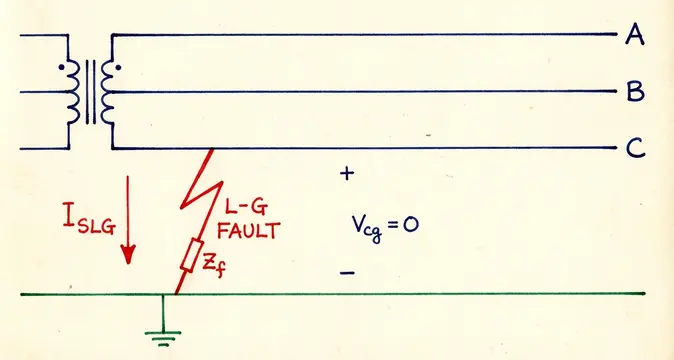
2.1 Line-to-Ground Short Circuit (L-G Fault)
This is the most common type of short circuit, accounting for approximately 70-80% of all electrical faults. It occurs when a live conductor comes into contact with the ground or any grounded surface. In your home, this might happen when a hot wire touches a metal outlet box that is properly grounded.
2.2 Line-to-Line Short Circuit (L-L Fault)
This type occurs when two phase conductors come into direct contact with each other. Line-to-line faults are less common than ground faults but can cause significant damage due to the high current flow between phases.
2.3 Double Line-to-Ground Short Circuit (L-L-G Fault)
This fault involves two phase conductors simultaneously contacting the ground. It is more severe than a single line-to-ground fault and requires immediate attention.
2.4 Three-Phase Short Circuit (L-L-L Fault)
Although the rarest type, a three-phase short circuit is the most severe. It occurs when all three phases of a power system come into contact with each other. This type of fault produces the highest short circuit current and can cause permanent damage to electrical equipment.
3. Common Causes of Short Circuits
Short circuits do not happen randomly. There are specific conditions and factors that lead to their occurrence.
3.1 Insulation Failure
The insulation covering electrical wires degrades over time due to age, heat, moisture, and physical wear. When the insulation breaks down, bare conductors may come into contact with each other or with grounded surfaces, causing a short circuit.
- Heat damage from overloaded circuits weakens insulation
- Rodents chewing through wire insulation expose conductors
- UV radiation deteriorates outdoor cable insulation
- Chemical exposure in industrial environments damages protective coatings
- Aging wires in old buildings become brittle and crack
3.2 Loose Connections
Electrical connections that become loose over time can lead to short circuits. When connections are not tight, they can create arcing, which generates heat and can eventually cause wires to touch inappropriately.
3.3 Water and Moisture
Water is a conductor of electricity. When moisture enters electrical enclosures, outlets, or wiring systems, it can create a conductive path between conductors that should remain isolated.
3.4 Foreign Objects
Objects falling into electrical equipment or panels can bridge the gap between conductors and cause short circuits. This is particularly common in industrial settings where debris and tools may accidentally enter electrical enclosures.
3.5 Manufacturing Defects
Sometimes, electrical equipment comes with inherent defects that can lead to short circuits. These defects might include inadequate insulation, poor quality materials, or design flaws.
4. Effects and Dangers of Short Circuits
Short circuits are extremely dangerous and can have devastating consequences. The effects range from minor inconveniences to life-threatening situations.
4.1 Immediate Effects
When a short circuit occurs, several things happen almost instantaneously:
- Current increases often reaching thousands of amperes
- Intense heat is generated at the point of the fault
- Bright electrical arcs may flash producing intense light
- Loud explosive sounds often accompany the fault
- Smoke and burning odors indicate thermal damage
4.2 Fire Hazards
One of the most dangerous consequences of a short circuit is fire. The excessive heat generated can ignite surrounding materials, including insulation, wood, paper, and other combustible items. Electrical fires caused by short circuits are responsible for thousands of structure fires every year.
4.3 Equipment Damage
Short circuits can destroy electrical equipment within seconds. Motors, transformers, switchgear, and other expensive equipment can suffer irreparable damage from the extreme currents and heat produced during a fault.
4.4 Electrical Burns and Injuries
People near a short circuit location can suffer severe burns from electrical arcs. The intense heat and explosive nature of short circuit faults make them particularly dangerous to workers and occupants.
4.5 Power Outages
Short circuits in power distribution systems can cause widespread blackouts, affecting homes, businesses, hospitals, and important infrastructure.
5. Short Circuits in Household Electrical Systems
Residential electrical systems are designed with multiple layers of protection against short circuits. However, short circuits in homes remain a common occurrence and a leading cause of electrical fires.
5.1 Common Locations for Household Short Circuits
In residential settings short circuits typically occur in specific areas:
- Electrical outlets, especially those in kitchens and bathrooms where moisture is present
- Light fixtures with damaged wiring or improper installations
- Appliance cords that have been bent, crushed, or damaged
- Circuit breaker panels with loose connections
- Extension cords that are overloaded or damaged
- Wall wiring that has been damaged by nails or screws during renovation
5.2 Residential Protection Devices
Your home’s electrical system includes several devices designed to protect against short circuits:
- Circuit Breakers are the primary protection device in modern homes. When a short circuit causes current to exceed the breaker’s rating, it automatically trips and disconnects the circuit. Standard residential breakers typically have ratings of 15, 20, or 30 amperes.
- Fuses in older homes perform the same function as circuit breakers. When excessive current flows through a fuse, the internal metal strip melts, breaking the circuit. Unlike breakers, fuses must be replaced after they blow.
- Ground Fault Circuit Interrupters (GFCIs) are specialized outlets required in areas where water is present, such as bathrooms, kitchens, and outdoor locations. GFCIs detect ground faults and disconnect power within milliseconds.
- Arc Fault Circuit Interrupters (AFCIs) are designed to detect dangerous electrical arcs that could lead to fires. They are now required by electrical codes in bedrooms and living areas of new homes.
6. Short Circuits in Commercial and Industrial Systems
Commercial and industrial electrical systems operate at higher voltage and current levels than residential systems. Short circuits in these environments are more dangerous and require more sophisticated protection measures.
6.1 Industrial Short Circuit Hazards
The consequences of short circuits in industrial settings are particularly severe:
- Higher voltage systems produce more intense arcing and heat
- Larger equipment contains more stored energy that is released during faults
- Three-phase power systems create more complex fault scenarios
- Continuous operations mean equipment is always energized
- Heavy machinery and motors draw substantial fault currents
6.2 Industrial Protection Systems
Industrial facilities employ multiple layers of short circuit protection:
- High-capacity circuit breakers rated for thousands of amperes
- Protective relays that monitor current and voltage continuously
- Current-limiting fuses that reduce fault current magnitude
- Coordinated protection schemes ensuring proper fault isolation
- Regular maintenance programs to detect potential problems
- Infrared thermography to identify hot spots before failures occur
6.3 Motor Short Circuits
Electric motors are common sources of short circuits in industrial environments. Short circuits in motors can occur due to:
- Winding insulation breakdown from overheating
- Bearing failures causing rotor-to-stator contact
- Moisture ingress into motor housings
- Voltage surges damaging insulation
- Age-related deterioration of motor components
7. Short Circuits in Power Transmission and Distribution Systems
Power systems, including transmission lines and substations are susceptible to short circuits that can affect entire regions.
7.1 Causes of Power System Short Circuits
Large-scale power system faults often result from:
- Lightning strikes on transmission lines and equipment
- Fallen trees or branches contacting power lines
- Vehicle accidents involving utility poles
- Equipment failures in substations
- Animal contact with energized conductors
- Extreme weather conditions such as ice storms and hurricanes
- Vandalism and copper theft
- Aging infrastructure and deteriorated insulation
7.2 Power System Protection Philosophy
Protection engineers design power system protection with several objectives in mind:
Selectivity ensures that only the faulted section of the network is isolated, minimizing the impact on other customers. When a short circuit occurs on a distribution feeder, only that feeder should be disconnected while the rest of the substation continues operating normally.
Speed is essential in power system protection. Faults must be cleared within cycles (fractions of a second) to prevent equipment damage and maintain system stability. Modern protective relays operate in milliseconds.
Reliability requires protection systems to operate correctly every time a fault occurs. Redundant protection schemes are often employed to ensure backup protection if primary protection fails.
7.3 Protection Equipment in Power Systems
- High-voltage circuit breakers capable of interrupting fault currents exceeding 40,000 amperes
- Protective relays including overcurrent, distance, and differential relays
- Current transformers and voltage transformers for measurement
- Reclosers that automatically restore power after temporary faults
- Fuses for protecting distribution transformers and capacitor banks
- Surge arresters to divert lightning currents safely to ground
8. Short Circuit Current Calculations
For a simple circuit, short circuit current can be calculated using Ohm’s Law:
\(I_{\text{short circuit}} = \frac{V_{\text{source}}}{Z_{\text{total}}} \)
Where V is the source voltage and Z is the total impedance of the circuit including source impedance, transformer impedance, and conductor impedance.
For complex power systems, engineers use software programs that model the entire network and calculate fault currents at every point in the system.
9. Prevention and Safety Measures
Preventing short circuits requires a combination of proper installation, regular maintenance, and adherence to safety standards.
9.1 Installation Best Practices
- Use appropriately rated wires and cables for the intended load
- Ensure all connections are tight and properly made
- Install protective devices correctly and coordinate their settings
- Follow electrical codes and standards during installation
- Use proper cable management to prevent physical damage
- Install appropriate enclosures to protect equipment from environmental factors
9.2 Maintenance Practices
Regular maintenance is essential for preventing short circuits:
- Conduct periodic inspections of electrical systems
- Test insulation resistance to detect degradation before failures
- Check for signs of overheating such as discoloration or burning smells
- Tighten all electrical connections regularly
- Replace damaged or aged cables and equipment
- Keep electrical enclosures clean and free of debris
- Verify proper operation of protective devices
9.3 Personal Safety
When dealing with electrical systems, personal safety must always be the priority:
- Never work on energized circuits unless absolutely necessary
- Use appropriate personal protective equipment
- Follow lockout/tagout procedures before performing maintenance
- Verify that circuits are de-energized before touching
- Maintain safe distances from energized equipment
- Report any signs of electrical problems immediately
10. What to Do When a Short Circuit Occurs
If you experience a short circuit in your home or workplace:
- Do not touch any electrical equipment that may be involved
- If safe to do so, turn off the main power supply
- Evacuate the area if there is fire, smoke, or burning smell
- Call emergency services if there is a fire or injury
- Do not attempt to reset breakers until the cause is identified
- Contact a qualified electrician to investigate and repair
Once the immediate danger has passed:
- Have a licensed electrician inspect the entire electrical system
- Identify and correct the root cause of the short circuit
- Replace any damaged wiring, outlets, or equipment
- Test all protective devices for proper operation
11. Conclusion
Understanding what a short circuit means in an electrical system is fundamental knowledge for anyone dealing with electricity. From the simple circuits in our homes to the complex networks that power our cities, short circuits represent a significant hazard that must be properly managed.
The key takeaways from this guide include recognizing that short circuits occur when current flows through an unintended low-resistance path, understanding the various types and causes of short circuits, appreciating the importance of proper protection devices, and knowing how to prevent and respond to short circuit events.