
A phase changeover switch is a manual or automatic device that is used to switch electrical connections between two power sources. The most common application of a phase changeover switch is to switch between utility grid power and a standby generator.
Phase changeover switch allows only one source to be connected to the load at a particular instant of time. This protects equipment from damage and keeps the working environment safe during power transfer.
The switch is placed between the incoming power sources and the load. It has multiple positions labeled as “Source 1,” “Off,” and “Source 2.” Moving the handle from one position to another connects that specific source to the load.
For example, consider a bakery that runs ovens and mixers on grid power. During a blackout, the baker starts a diesel generator and turns the changeover switch from “Source 1” to the “Source 2”. The grid connection breaks completely before the generator connection forms. This prevents damage to the generator and protects the grid network from backfeed.
1. Why Phase Changeover Switch is Necessary?
Power interruptions may happen due to multiple reasons including storms, equipment failure, grid maintenance, or overload conditions, etc. During power interruptions, businesses that depend on continuous power faces production loss, equipment damage, or safety risks without a proper switching mechanism.
For example, a cold storage facility storing frozen food products cannot afford power gaps. A few hours without refrigeration spoils inventory worth thousands of dollars. A changeover switch connected to backup power prevents this loss by maintaining continuous operation.
2. How Does a Phase Changeover Switch Work?
The internal mechanism of a phase changeover switch uses a rotary cam or lever design connected to copper or silver-alloy contacts. Each position on the switch corresponds to a specific set of contacts closing or opening.
The switch design follows a break-before-make sequence. This means the connection to the connected power source breaks fully before the connection to the new source forms. This design prevents both the sources from linking together which would otherwise cause short circuits or equipment damage.
Manual switches require a operator to rotate the handle to the desired position. The mechanical linkage inside moves the contacts accordingly. However, the automatic transfer switches use voltage-sensing relays that detect power loss and trigger a motorized mechanism to switch sources without human intervention.
A 3-phase changeover switch operates on the same working principle but manages three live conductors (L1, L2, L3) plus a neutral line. Industrial equipment like compressors, pumps, and heavy motors run on 3-phase power. Therefore, these systems need switches built for three-phase configurations.
3. Components of a Phase Changeover Switch
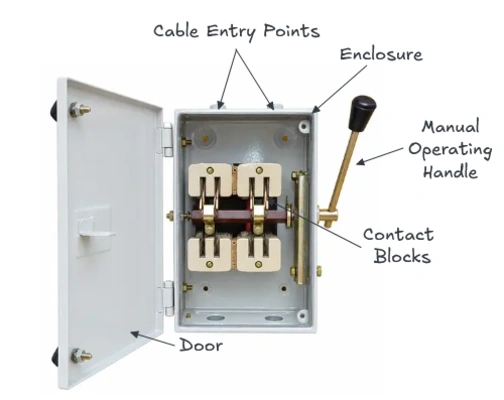
Body and Enclosure: The outer casing houses all internal components and protects users from direct contact with live parts. Enclosures come in different materials and ratings based on installation and environment.
Contact Blocks: These metal contacts make and break the electrical connection. Higher quality switches use silver-plated contacts to reduce resistance and prevent arcing damage.
Operating Handle or Lever: This external control lets the operator select the power source. Some designs contain a key-lock feature that prevents unauthorized switching.
Mechanical Interlock: This is the internal mechanism that physically stops both sources from connecting simultaneously.
Terminal Connections: To connect the incoming and outgoing wires.
4. Types of Phase Changeover Switches
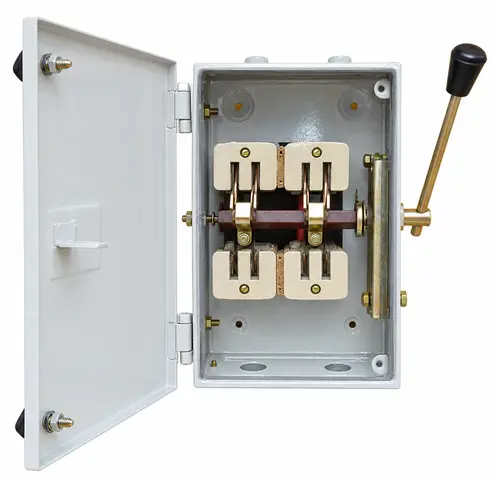
4.1 Manual Changeover Switch
In manual type phase changeover switches, the operator turns the handle manually to switch between sources. These switches are good for applications where brief delays during power transfer are acceptable.
A small retail store with a backup generator might use this type. The store owner or staff member switches the lever when grid power fails, then switches back once power returns.
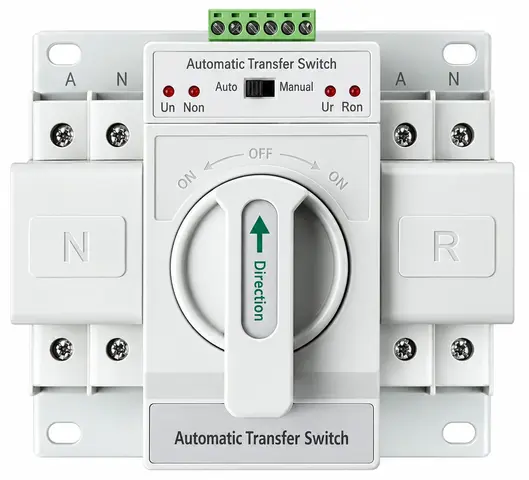
4.2 Automatic Transfer Switch (ATS)
The Automatic Transfer switch consists of sensors and control logic that detect voltage drops and trigger automatic switching. No manual action is required during a power failure event.
Hospitals use ATS units for operating theaters and intensive care units. If grid power fails, the ATS detects the voltage loss within milliseconds and switches to generator power without any delay. This keeps ventilators, monitors, and surgical equipment functioning continuously.
4.3 Single-Phase Changeover Switch
Single-phase changeover switch handles standard two-wire electrical connections (live and neutral) common in residential and small commercial settings.
For example, a home with a portable diesel generator for backup power uses a single-phase switch rated for the home’s electrical load, such as 32A or 63A.
4.4 Three-Phase Changeover Switch
Three-phase changeover switches are designed to handle three live wires plus one neutral wire. It is used in industrial and heavy commercial loads.
A water treatment plant running large pumps and motors needs a 3-phase changeover switch rated to handle the combined current draw of all connected equipment.
5. Wiring of a Phase Changeover Switch
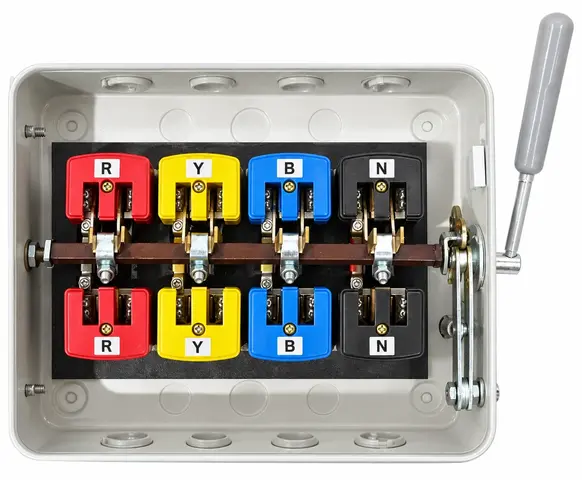
The incoming wires from both the power sources connect to separate input terminals on the switch. The output terminal connects to the load side which directly feeds equipment or a distribution panel.
For a single-phase setup, connect the live wire from the grid to one input terminal and the live wire from the generator to the second input terminal. The neutral wire from both sources connects to a common neutral bar.
For a 3-phase changeover switch, each phase (L1, L2, L3) from both sources connects to its corresponding terminal on the switch. The output side then feeds the three-phase distribution panel for your building or facility.
6. Applications
Manufacturing Facilities: Production lines running continuous processes like plastic extrusion or metal stamping need changeover switches to avoid product defects caused by unexpected power loss.
Healthcare Facilities: Hospitals, clinics, and diagnostic centers use changeover switches paired with automatic transfer systems to protect patient safety during power interruptions.
Data Centers: Server farms and cloud hosting facilities rely on changeover switches to prevent data loss and maintain uptime guarantees for clients.
Commercial Buildings: Office towers, shopping malls, and hotels use changeover switches to keep elevators, lighting, and HVAC systems running during outages.
Residential Backup Systems: Homeowners with standby generators use changeover switches to power essential circuits like refrigerators, well pumps, and medical equipment during outages.
Agricultural Operations: Dairy farms, poultry houses, and irrigation systems use changeover switches to maintain power for refrigeration, ventilation, and water pumps.
Telecommunications: Cell towers and network stations use changeover switches combined with battery backup or generators to maintain continuous signal coverage.
7. Summary
A phase changeover switch protects equipment and maintains power continuity during outages across homes, businesses, and industrial facilities. Choosing between manual and automatic types depends on how important continuous power is for your operation. Matching the switch to your phase type, load capacity, and environment prevents equipment damage and safety hazards. Regular testing and maintenance is required to keep the switch ready for actual power failures.
8. Frequently Asked Questions (FAQs)
A changeover switch is the general category that covers any device that switches loads between power sources. A transfer switch specifically describes the automatic version of the changeover switch that detects power failure and switches without manual operation.
The break-before-make mechanism physically disconnects the grid connection before connecting the generator. This stops generator power from flowing backward into grid lines.
Basic single-phase switches for small residential circuits might fall within reach for someone with solid electrical knowledge and proper safety precautions. Any 3-phase installation or commercial application should be done by a licensed electrician because of complexity and legal code requirements.
Calculate the total current draw of all equipment that will run through the switch, then add 20-25% as a safety margin. A facility drawing 150A total load should use a switch rated for at least 180-190A.
Test manual switches monthly through each position to confirm smooth operation. Test automatic transfer switches monthly by simulating power loss to verify correct detection and switching time.